
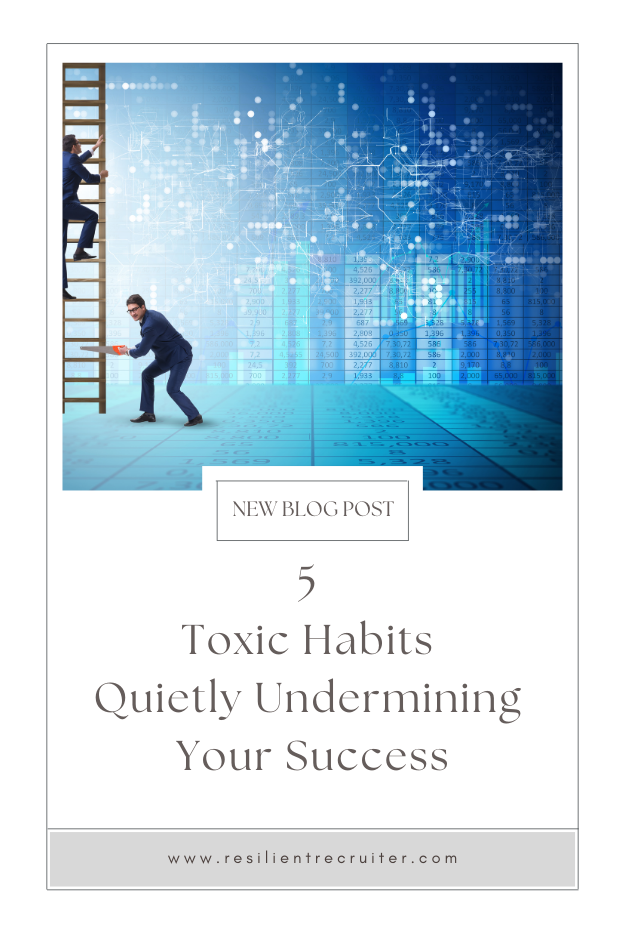
You can work longer hours, chase bigger titles, and check every box you were told leads to success – and still feel like you’re falling behind.
If that sounds familiar, the problem likely isn’t your talent, effort, or ambition. It’s your habits.
Most people define “success” differently. For some, it’s money or status. For others, it’s autonomy, fulfillment, or time with the people who matter most. But regardless of how you define it, the path to success is shaped less by major career moves and more by the small, repeated behaviors you tolerate every day.
This is why so many professionals feel like they’re swimming upstream: working hard without seeing proportional results.
As Harvey Mackay famously said, “The bridge between wishing and accomplishing is discipline.” That discipline isn’t built through grand gestures. It’s built by eliminating the toxic habits quietly draining your momentum.
Here are five of the most common ones.
1. Choosing Entertainment Over Growth
There’s nothing wrong with enjoying a great TV show or an occasional scroll on your phone. The problem arises when entertainment consistently replaces learning.
Want to be motivated? Read a great success book that teaches you a new approach to overcoming your weaknesses.
I will never forget a phone interview I had when I was 22 years old. I was lucky enough to get a phone call from an executive at a company I was dying to work for. We chatted for several minutes, and I felt I answered the questions well.
He then asked me what book I was reading. “Um, well…. I’m not a big reader.” He then asked “what do you do to improve yourself?” I again stumbled over my words and came up with a flimsy answer. He was not impressed. I could tell I had blown the interview. At the end, I asked if there were any authors he suggested, in terms of business books. He provided several well-known authors such as Zig Ziglar – all of which I am very familiar with today! From that moment on, I knew I had a long way to go if I wanted to be successful in life.
2. Running on Empty
Chronic exhaustion is not a badge of honor.
The most successful people you know may work long hours, but they rarely look depleted. That’s because they understand a fundamental truth: sleep is a performance tool.
Burning the candle at both ends might work occasionally, but over time it erodes focus, decision-making, health, and emotional resilience. Lack of rest doesn’t just make you tired; it makes you less effective.
You don’t need more hours in the day. You need better energy when you’re using them.
3. Neglecting Your Body
We are all strapped for time – I get it. I even wrote an article on how busy we are in this day and age.
Exercise is critically important – for your body and your mind. When you start getting proper rest, the energy to exercise will come. Exercise doesn’t have to be a regimented 60-minute session, five days a week. Start small. Get up from your desk every hour and spend a few minutes walking the halls. Walk outside if you are able. Your employer may even support a standing desk or a treadmill desk. If you can work exercise into your work day, even better, right?
Now let’s get to the eating part. You don’t have to go cold turkey and eliminate all sugars from your diet, but be conscious of what you put into your body. Start with trying to eat vegetables every day. Choose something lighter for lunch. Planning your meals in advance makes this easier, but baby steps. Being aware of what you are eating is the first step.
Your body is the vehicle carrying your ambition. Treat it accordingly.
4. Allowing Toxic People Access to Your Energy
Success thrives in the right environment.
If you surround yourself with negativity: constant complaining, cynicism, or people who discourage growth – it will eventually wear you down. Some toxic individuals are unavoidable, but your level of engagement is always a choice.
Limit exposure. Set boundaries. Refuse to participate in unproductive negativity.
And when it comes to friendships, be honest with yourself. Relationships should elevate you, not drain you. Sometimes success requires a difficult but necessary “house cleaning.”
5. Living Without Structure
Disorganization creates unnecessary stress and false urgency.
If you’re constantly overbooked, double-booked, or reacting instead of planning, your priorities are running you, not the other way around. A structured calendar isn’t restrictive; it’s liberating.
Schedule everything that matters: work, exercise, rest, and personal time. Learn to say no. Protect your time with the same discipline you protect your professional commitments.
Eventually, you will develop an understanding of the things that rank in importance to you. Once you do, your satisfaction level will skyrocket. Once that happens, success (both personal and professional) flows easily.
Clarity creates confidence. Confidence fuels progress.
The Real Takeaway
Notice what these habits have in common: none of them are directly tied to your job description.
They aren’t about how hard you worked on the last project or how visible you are to leadership. They’re about how you manage your energy, focus, and environment.
Success is built from the inside out, and your daily habits are either accelerating you forward or quietly holding you back.
Now Let’s Put This Into Action
Don’t try to fix everything at once.
Choose one habit from this list and commit to changing it this week. One small, intentional shift can create momentum you didn’t realize you were missing.
If you want more clarity, structure, and purpose in how you define and pursue success, start there. The rest will follow – often faster than you expect.

by Natalie Lemons
Natalie Lemons is the Founder and President of Resilience Group, LLC, The Resilient Recruiter, and Co-Founder of Need a New Gig. She specializes in the area of Executive Search and services a diverse group of national and international companies, focusing on mid to upper-level management searches in a variety of industries. For more articles like this, follow her blog. Resilient Recruiter is an Amazon Associate.